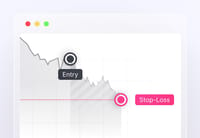
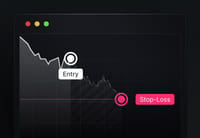
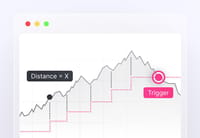
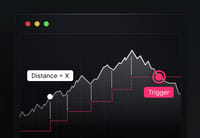
A stop-loss limit order triggers after a downside condition and then places a limit child at a separate price.
What it does
A stop-loss limit trigger activates after a downside condition and attempts to submit a limit child at a separate configured price.
It adds price control after activation, but that control can prevent the child from completing.
How it works
| Price | Purpose |
|---|---|
| Trigger price | Determines when the condition activates |
| Limit price | Defines the worst price the child may accept |
After activation, the child follows normal limit-order behavior. It can execute immediately, fill in parts, rest in Open Orders, or remain completely unfilled.
When to use it
- Use it when the child needs a firm price boundary. Stop-Loss Limit fits a downside condition where the trader will not accept execution beyond a chosen limit price.
- Avoid it when reducing exposure matters more than price. Choose Stop-Loss Market when a limit child remaining unfilled would create more risk than price movement during execution.
Confirm both prices, the eligible side, quantity, price source, time-in-force, precision, and available balance before submitting.
Example
Let's say Bitcoin is currently trading at 100,000 USDT. You hold 0.01 BTC, worth about 1,000 USDT, and want to reduce your exposure if the price falls to 95,000 USDT, but you will not sell below 94,500 USDT. Because that minimum price matters more than guaranteeing a fill, you choose Stop-Loss Limit.
- A Last Price trade at or below 95,000 USDT activates the stop.
- Polyester submits a Limit sell for 0.01 BTC at 94,500 USDT.
- The market gaps to 94,000 USDT, where all available bids are below your limit price.
- The child order does not accept those lower bids and remains open.
Result: Your 0.01 BTC remains unsold until eligible liquidity reaches 94,500 USDT or higher, or you cancel the child order.
These are example prices. A child order can also fill partially before its remaining quantity rests.
What to watch
- A fast move can pass through the limit before the child works.
- A restrictive limit can leave exposure open.
- Partial fills can leave a working remainder.
- Canceling the trigger does not cancel a child that already exists.
- Monitor the parent in Order Triggers and the child separately.